Monday, July 26, 2010

KY Governor's Conference on the Environment: Oct 20-21

Kentucky Governor’s Conference on the Environment to take place this fall


[From a email PR announcement:] The 34th Governor’s Conference on the Environment will be held Oct. 20-21 at the Louisville Downtown Marriott. The creation of the Energy and Environment Cabinet developed a convergence of protecting the environment and exploring ways for Kentucky to become energy independent. The focus of this year’s conference is to discuss the link between energy, environment and the economy.   Industries, businesses, communities, academia, public servants and individuals will gain valuable knowledge about federal and state legislation that will impact Kentucky’s economy and future. We welcome your input at the conference. For more information, contact Natalie Jensen at 502-564-7192 or at natalieE.jensen@ky.gov.

Posted via email from Verdant Design

Tuesday, July 20, 2010

Current and proposed images of the B-B landscape

The photos show the current landscape around this Shelby County home.  The proposed images show in a tangible way (rather than a plan or section) what the future landscape can look like.  The homeowners can use these images as a guide for future landscape DIY projects.  It shows what plants to use, how to organize them and how they will look together as they grow.

Posted via email from Verdant Design

Monday, July 12, 2010

Video of recent work

This is a short slideshow of recent landscape architecture work.  The projects vary from the small to large, residential to commercial properties.

http://www.youtube.com/user/Jpac1#p/u/1/0PkYNVr-npI

John Pacyga

www.VerdantKY.com

twitter.com/VerdantKY

Posted via email from Verdant Design

Tuesday, June 29, 2010

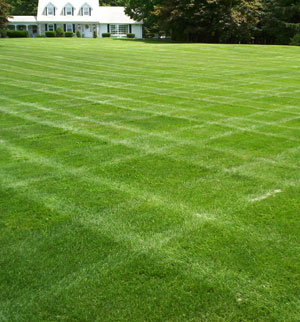
Ending the Reign of Lawns « The Dirt


The Guardian (UK) reports that many U.S. homeowners are removing their ”chemically-treated” manicured lawns and adding organic vegetable and fruit gardens, native plants, and other natural landscapes in their place. The movement is growing because “eco-conscious” consumers are learning more about the negative environmental impacts of conventional lawns. “Groups as diverse as urban garden clubs, environmental groups and wildlife protection groups are spreading the word that a big, lush lawn harms biodiversity and is an eco- disaster.”

U.S. lawns are grown from non-native grasses that use lots of water, pesticides and fertilizers. That even dark green color prized by so many actually requires the use of lots of chemicals. The use of these fossil-fuel-based derivatives are unhealthy for lots of reasons, but their production also creates greenhouse gas (GHG) emissions. Steven Saffer, Audubon Society’s At Home program, said: “Lawns contribute to climate change. The fossil fuels used in fertiliser and pesticide production add CO2 to the environment.”

As has been noted by the Sustainable Sites Initiative, the first rating system for sustainable landscapes, the total surface area of U.S. lawns is larger than any other irrigated crop.  The Lawn Institute, which represents the $35 billion turf industry, estimates that there are now some 25 million acres of lawn, which have replaced ecosystems that once provided a range of local ecosystem services. Saffier said: “The nutrient, hydrology and nitrogen cycles that happen naturally in biodiverse ecosystems are completely absent in lawns.” Additionally, wildlife like birds and many insects don’t get much out of lawns — there is no natural habitat there.

According to The Guardian, almost all birds rely on insects for their food source. These insects rely on just two-to-three types of native plants. Audubon says one fourth of all U.S. bird species are in decline. “Populations of meadow larks and other grassland species in the mid-western U.S. have plummeted 60 percent, while interior forest birds, like scarlet tanagers, have also seen a precipitous decline.”

Birds may be declining because they can’t find insects to eat, but they are also negatively impacted by all the 90 million pounds of chemicals used to treat lawns each year. “Of the 30 most common pesticides used on lawns, more than half are toxic to birds and fish, and linked to cancer and birth defects in humans, according to the environmental group, Beyond Pesticides. Eleven of the 30 are endocrine disrupters, chemicals that interfere with reproductive and other hormones in humans and animals.” All those chemicals also filter off lawns into groundwater.

While lawns remain a status symbol in many places, some communities are helping to end the long reign of turf. Food Not Lawns, one organization, encourages homeowners to rip out lawns and add “fruit and nut trees, like pecans, walnuts and almonds, as well as vegetables.” Fritz Lang’s Edible Estates has also helped popularize the yard as farm movement (see earlier post). In fact, in many urban areas, small-plot lawns have already been turned into productive garden landscapes despite the many obstacles. For instance, in many local counties, zoning rules ban front-yard vegetable gardens out of fear that they will attract rodents or be visually unappealing and decrease property values (see an earlier post for a full discussion on urban agriculture).

Read the article

Also, check out an example of one restrictive lawn-related zoning call that makes sense. A few wayward homeowners have been ripping out lawns and replacing them with fake plastic versions in an attempt to create the appearance of lush, verdant dark green lawns. The Press-Telegram in Long Beach, California reports that “today’s fake grass is made from polyethylene, a popular plastic, which is cut into ribbons. The ribbons can be custom trimmed into a variety of shapes and colors.” Local planning commissions in California are now limiting the use of synthetic turf.

Image credit: American Consumer News

Posted via email from Verdant Design

Ending the Reign of Lawns

Wednesday, June 23, 2010

Is inner city next for redevelopment?

*This article can also be accessed if you copy and paste the entire address below into your web browser.
http://www.mysanantonio.com/business/local/redeveloping_the_inner_city_968422...

Posted via email from Verdant Design

Monday, June 21, 2010

Designing a Kentucky office building landscape

There are many landscape features that make Kentucky what it is: limestone rock outcrops, durable plantings that take dry summers with infrequent downpours, and undulating hills of grasses.  The rocks found on the site during construction were used to build mini retaining walls to add interest to the required berms to shield the parking lots from the street.  The rocks formed backdrops for the plantings at the entrances and for the street trees.  Grasses, easily maintained shrubs, and perennials form a multi-season landscape that work well in the Kentucky climate.

<a href=”http://www.verdantky.com/projects/2701-eastpoint-parkway/”>More on 2701 Eastpoint Parkway</a>

Posted via email from Verdant Design

Friday, June 18, 2010

From erosion to focal point: a dry creek stone swale

The Smith Residence shows how a very steeply sloped back yard can become its greatest asset.  The slope of the yard meant water cascaded down the slope and would erode the soil in the shady part of their yard.  Most of the time the area is dry (as many creeks in Kentucky behave) but while it rains, it controls the water.  The dry creek swale, or shallow depression, slows the water down and allows it to soak in.  The created swale is a point of interest in the yard and is low maintenance.  Click here to learn more about the Smith landscape.  Detailed design and installation was done by Boone Gardiner Nursery.

Posted via email from Verdant Design

Thursday, June 10, 2010

Tree component process

This is an attempt to show the best process for creating tree components from photos.  I also tried using Adobe’s new Photoshop CS5 tool, Refine edge, in the process. In terms of rendering a the photo’s edge, the traditional methods using Select by Color Range proved superior.  SketchUp seemed to show Refine Edge’s marks in the .png of the tree.

The new technique that seemed to speed up the component process was using Photoshop to find the tree’s edge using the Magnetic Lasso tool, then converting that selection edge into a Work Path.  The Work Path was exported to Illustrator, then exported as a .dwg.  In SketchUp, the image is brought in as a texture and the .dwg is imported for the outline.  With some scaling and rotating they are put on the same plane.  The square surrounding the image is erased, the new .dwg outline is hidden and the component is made. 

The largest benefit is the speed by which the outline can be created and the reduction in edges needed (999 in the dwg process compared to 2592, in this example).

Try the process and let me know if you have similar results.

John Pacyga

www.VerdantKY.com

twitter.com/VerdantKY

Posted via email from SketchUp for landscapes

Tuesday, June 01, 2010

Hungry? http://soupbycycle.com/

If you live/work along Frankfort Avenue, Downtown, or the Highlands, you need to try Soup By Cycle.  Ian Ritchie delivers by bicycle fresh, homemade soup using local, organic ingredients.  For us, it is terribly convenient: he drops the soup off frozen at the house and we pay him for the soup.  He can even do a monthly soup subscription.  Ian was featured in a C-J article where you can read more about him and his business.

Soup delivery business hopes to tap into bike culture

Louisville venture combines love, work

By Jere Downsjdowns@courier-journal.com • May 31, 2010

http://www.courier-journal.com/article/20100531/GREEN/5310347/Soup+delivery+business+hopes+to+tap+into+bike+culture

Posted via email from Verdant Design

Monday, May 31, 2010

'LEED for Landscapes' Put to the Test

'LEED for Landscapes' Put to the Test

WASHINGTON, DC — Landscape architects and experts have launched a sweeping test of a sustainability rating and assessment system for greenspaces in the built environment with a pilot that involves more than 150 sites in 34 states, Canada, Iceland and Spain.

The pilot is being conducted by the Sustainable Sites Initiative, abbreviated as SITES, which led the development of the voluntary rating program that its creators hope will be used like the LEED system -- but one focused on landscapes and greenspaces.

The system created by the partner organizations behind SITES -- the American Society of Landscape Architects, the Lady Bird Johnson Wildflower Center at The University of Texas at Austin and the United States Botanic Garden -- is intended for use on sites of all types to gauge and certify their sustainability.

The standards, which were released last fall, can be applied to landscaping at commercial and public buildings, transportation corridors and parks. It's not necessary for buildings to be present, but the sites must be designed landscapes or greenspaces.UTA Center Street Rain Garden

SITES opened applications for the pilot in November and expected to receive perhaps 75 strong contenders, according to Steve Windhager, director of the Landscape Restoration & Sustainable Sites Initiative at the Lady Bird Johnson Wildflower Center at the University of Texas at Austin. The organization received more than four times that many.

"We were overwhelmed, but in a good way," Windhager told GreenerBuildings.com. "We received 354 applications."

The pilot includes projects at corporate headquarters, industrial complexes and educational centers as well as high-profile efforts for the Smithsonian’s National Museum of African American History & Culture, the New Orleans’ Lower Ninth Ward Sustainable Infrastructure Project and the Indianapolis Super Bowl Village. They range from less than an acre to hundreds in size and involve relatively modest to multimillion-dollar budgets.

In addition to providing visual and physical respite from the built environment, the sites in the pilot are designed to reduce environmental impacts not only of the location itself, but also the lands around it in many cases. For example, sites in the pilot may restore habitats, rehabilitate landfills, clean and store stormwater in addition to lowering the urban heat island effect or fostering outdoor education.
SITES certification levels
“It’s exciting that many of these pilot projects -- eight in every 10 -- will revitalize previously built landscapes,” Susan Rieff, executive director of the Lady Bird Johnson Wildflower Center said in a statement this week. “We can address the serious environmental challenges the world faces in its existing communities by consciously redeveloping these spaces for ecological health as well as beauty.”

Under the SITES system, locations are rated on a 250-point scale for possible certification at four levels. Points are awarded for elements such as site selection, water, soil, vegetation, materials, human health and well-being, construction and maintenance. Sites attaining 40, 50, 60 or 80 percent of possible points are awarded one-, two-, three- or four-star certification, respectively.

Projects participating in the pilot are in various stages of development; some are still in the design phase, others are near completion. They all have until June 2012 to provide feedback about the benchmarking program to SITES. The data will be used in the certification process for the projects and to revise the assessment system. SITES has a goal of releasing a final version of its rating system and reference guide in 2013.

Details about the projects selected for the pilot are available at www.sustainablesites.org/pilot. More information about the Sustainable Sites Initiative and its rating system is available from "The Sustainable Sites Initiative: Guidelines and Performance Benchmarks 2009." (pdf) and "The Case for Sustainable Landscapes" (pdf).

Images of the Center Street greenspace and rain garden at the University of Texas, Arlington, courtesy of the Sustainable Sites Initiative.

Posted via web from Verdant Design

Monday, May 24, 2010

Updated HBC landscape master plan video

I’ve updated the landscape master plan video for Highland Baptist Church.  This version contains the latest changes including the memorial garden that was dedicated on Sunday.  Plus the video is smaller and loads faster!

http://www.verdantky.com/2010/04/13/highland-baptist-church-master-plan-2/

http://verdantky.com/HBC.flv

Posted via email from Verdant Design

Monday, May 17, 2010

Popular landscape features: Outdoor rooms, low-maintenance/drought tolerant plants, and gardens ~

A survey of Landscape Architects found Outdoor rooms (sitting areas, outdoor dining, grill areas), low-maintenance with native/adapted plants, and gardens popular for 2010.  Much of this is against a backdrop of smaller lawns for residential landscapes.  The new landscape elements are listed at the bottom of this page: http://www.landscapeonline.com/research/article/13148


More information can be obtained at: www.asla.org/residentialinfo.

Posted via email from Verdant Design

Tuesday, May 11, 2010

Limbwalker Tree Service, Inc gains tree care accreditation

If you need tree care in the Louisville area, I highly recommend Limbwalker Tree Service, Inc.  They are knowledgeable in tree care, and should you need to have a tree removed, they are highly skilled.  They have just completed a Tree Care Company Accreditation with the Tree Care Industry Association (TCIA).

Posted via email from Verdant Design

Thursday, May 06, 2010

kyGREENtv http://www.kygreen.tv/channels/ Kentucky's Internet TV station on all things GREEN

kyGREENtv is an internet based television station and social network focused on promoting all things green in Kentucky. People can tune in and find everything from educational and original programming, how-to videos, discover local events, green businesses and non-profit organizations. We have a motto here at kyGREENtv that we're Organically Grown, Sustainably Operated. For us, that means we're always evolving as a company. We're nurturing our resources so we can continue to offer the best programming, resources and features for our audiences to enrich their lives and our own.”

Join me in watching shows about all things green in Kentucky.

http://www.kygreen.tv/channels/

Posted via email from Verdant Design

Tuesday, April 27, 2010

Honeysuckle Vine (Lonicera sempervirens) is blooming!

With all of the rain, Louisville is GREEN! I couldn't resist taking photos
of the Honeysuckle Vine (Lonicera sempervirens) which has put on a
tremendous amount of growth this spring. It is a native climbing vine that
needs support, but it can put on a show all season long (it blooms from
April through November). It is a favorite of hummingbirds!

Have a great KY Derby!

Posted via email from Verdant Design

Saturday, April 24, 2010

Drought assessment for Louisville and Grantsburg is not good: http://www.cpc.ncep.noaa.gov/

The NOAA Climate Prediction Center, which forecasts weather and ground conditions for up to 3 months out, is predicting a persistent drought in northern Wisconsin and drought development in the central part of the bluegrass state through July. 

http://www.cpc.ncep.noaa.gov/

They also have maps available for 6 day, 14 day, 1 month and 3 month temperature and precipitation.  It’s a great site, but sometimes has bad news.  It looks like we are in for a drier condition for the bluegrass region of Kentucky… Enjoy (and store) the rain while we have it!

Posted via email from Verdant Design

Thursday, April 22, 2010